CA Client Login
 US Client Login

Second Quarter 2026 : If My Memory Serves Me Right
The AI Trade Is Back In Full Force As The Iran War Simmers Down And Historic Spending On Data Centres Causes A Shortage In Memory Chips
Investor concerns about the long-term economic consequences of the Iran war have largely faded though there are many unresolved issues. Investor attention has since turned to the consequences of the historic spending by the seemingly price insensitive hyperscalers (i.e. the companies that are building data centres to power AI applications).
Iran War – Not So Mission Accomplished
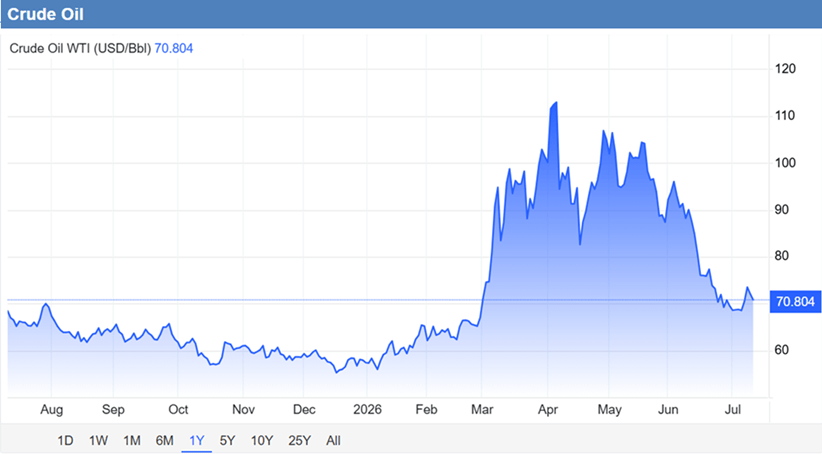
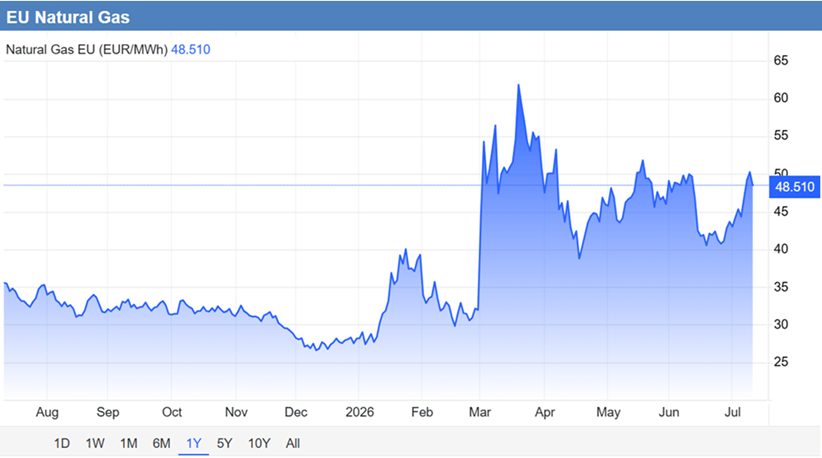
The Iran war, which started in late February, caused energy prices to spike, sparking fear of higher inflation globally and a worldwide slowdown in economic growth. The second quarter started with oil prices at ~$101 per barrel (WTI), well above the pre-war level of ~$67 per barrel. The price of LNG followed a similar path as oil and LNG, along with natural gas prices in import-dependent regions (e.g. Europe, China, Japan), started the second quarter at elevated levels as well.
In early April, a short-term ceasefire was announced and shortly after, both the U.S. and Iran established a blockade of the world’s most critical global energy chokepoint – the Strait of Hormuz. The number of ships transiting the Strait remained close to zero as tense negotiations continued for several weeks. A breakthrough occurred in mid-June and the framework for a more permanent ceasefire was established, though many disagreements remain, particularly surrounding Iran’s right to block or charge for passage through the Strait of Hormuz as well as Iran’s right to peaceful nuclear activities and enrichment. As of second week of July, shipping activity through the Strait has recovered to about one-third of normal although the ceasefire is on shaky ground with limited military conflict resuming in early July.
Despite the limited shipping activity through the Strait and continued uncertainty surrounding the longevity of any ceasefire agreements, oil prices finished the second quarter below $70 (WTI), close to pre-war levels. The decline in oil prices helped calm fears of high inflation heading into the summer driving season. The price of many other commodities that are critical to the smooth functioning of the economy like fertilizers, food, and steel also fell back toward pre-war levels, although LNG and natural gas prices in import-dependent regions remain notably above pre-war levels.
Memory Chip Mania
Hyperscalers – Amazon, Alphabet, Meta, Microsoft, and Oracle – have ramped up data centre investment in recent years with 2026 capital expenditures, consisting mostly of investment in data centres, expected to reach ~$650 billion in 2026 and ~$900 billion in 2030, up from an average of ~$150 billion in 2020 to 2023.
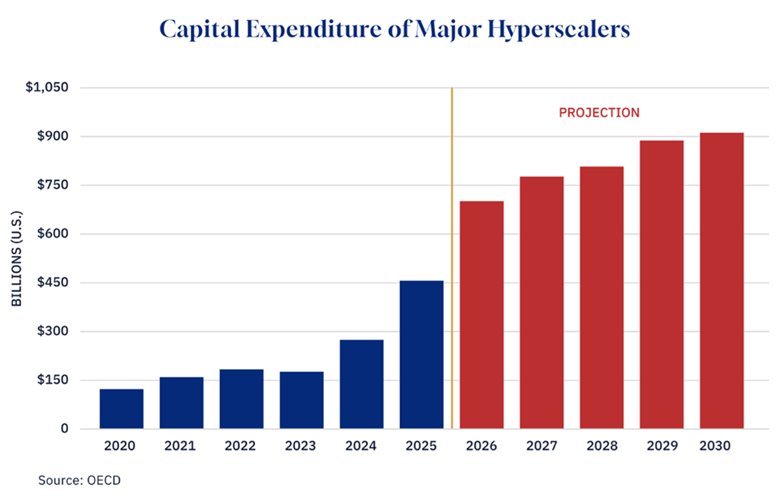
The rapid increase in spending pushed the prices of various data centre components far higher as hyperscalers compete with each other over access to products, ensuring that only those companies with access to hundreds of billion in capital (i.e. the hyperscalers) can compete for market share in AI compute (i.e. facilitating AI software).
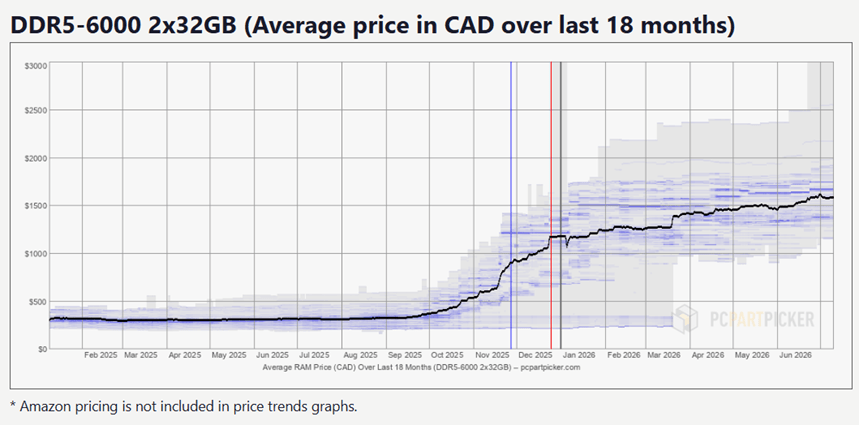
Memory chip prices, like those of the DDR5-6000 2x32GB below, started rising rapidly toward the end of 2025 and prices continued to climb throughout the first half of 2026. For this particular memory chip, the price has risen to ~$1,600 at the end of June 2026, up from ~$300 in September 2025.
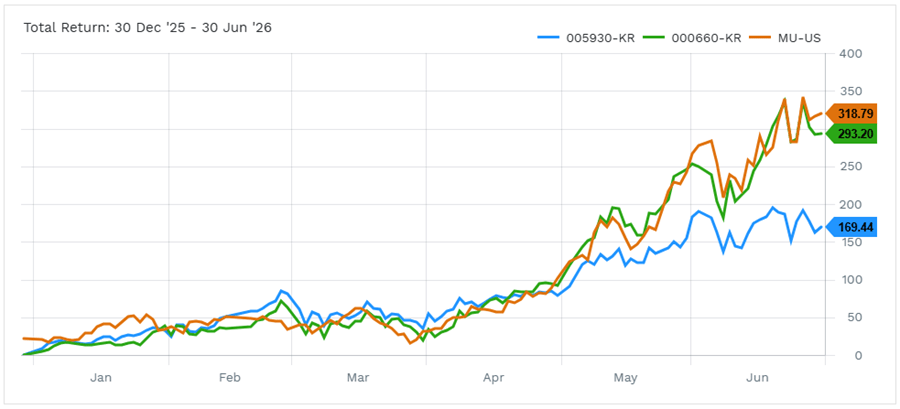
The stock prices of the three largest memory chip producers – Samsung, SK Hynix and Micron – started the year strong but it was only in early May when investors shifted their attention from the Iran war back to the AI trade, realizing that due to extraordinary data centre spending commitments by the hyperscalers, the memory chip shortage and elevated chip pricing could last for years.
Performance of Samsung Electronics (005930-KR, Light Blue), SK Hynix (000660-KR, Green), Micron Technology (MU-US, Orange)
January 1, 2026 to June 30, 2026
What we are seeing is effectively a transfer of cash flow from the hyperscalers to the semiconductor companies, with the memory chip companies simply being the new beneficiaries after years of cash flowing toward GPU and other semiconductor manufacturers like Nvidia, Broadcom and Applied Materials, in addition to Micron, as seen in the chart below.
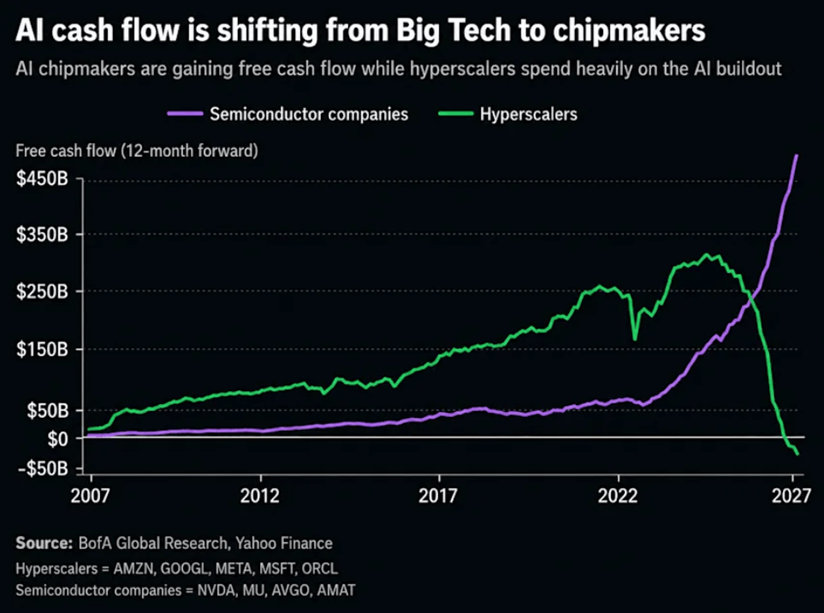
The boom in memory chip and other semiconductor pricing as well as memory chip and other semiconductor stocks is solely reliant on the hyperscalers’ willingness to continue pouring nearly all of their free cash flow or more into data centre components at prices that are well above the cost of production. The stock performance of hyperscalers has been weak since the start of 2025 when data centre investment ramped up aggressively while the stock performance of semiconductor manufacturers, including that of memory chip manufacturers, has been strong. The end of this boom may not be the result of a lack of AI’s relevance to the future of the global economy nor hyperscalers prioritizing data centre investment but instead a response to investors’ distaste for such aggressive data centre investment causing a curtailment of data centre investment over the coming years.
In the meantime, there are consequences for those households and businesses operating outside of technology because many of the components used in data centres are part of the technology used in everyday life. For example, in late June, Apple announced it was raising the price of many of its Macbooks and iPads due to the rapid increase in the price of memory chips, and analysts expect an inevitable price hike for Apple’s iPhone as well. Apple’s price increases opened the door for other companies to announce price increases including Microsoft, Sony, Dell and HP, to name a few.
These price hikes are likely to curtail or delay purchases by some households and businesses and may cause spending in other areas to be less than previously expected, negatively impacting economic growth in sectors outside of the semiconductor industry.
The Economy: Current State and Outlook
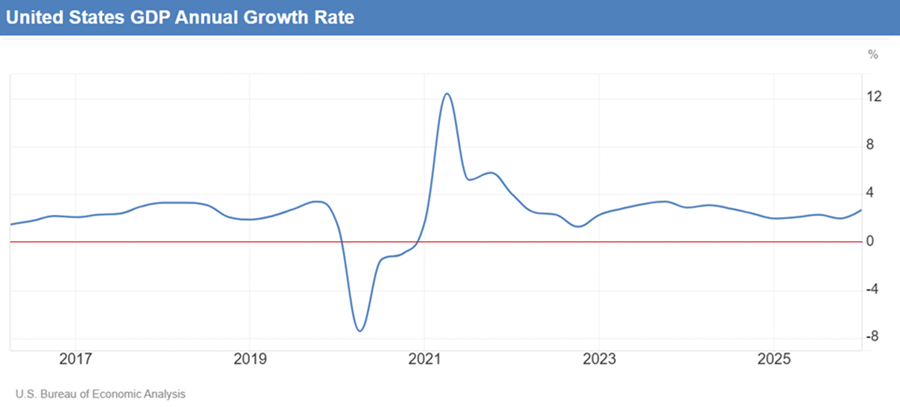
The inflation related to aggressive investment in AI data centres could end up keeping global interest rates elevated for longer than expected, which creates a headwind for most companies operating outside of the technology sector. The US economy, which is seeing plenty of AI related investment, is chugging along at a healthy pace despite low growth experienced in many sectors outside of technology.
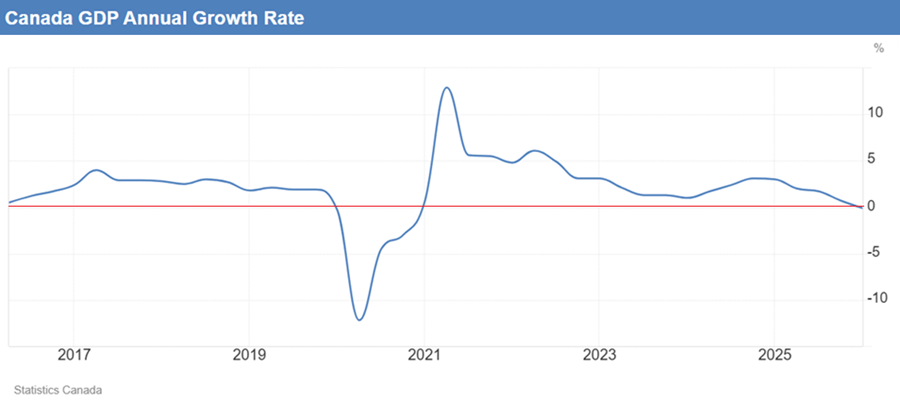
Canada, which is seeing relatively little investment in AI data centres and is highly interest rate sensitive due to real estate investment being an outsized component of GDP, saw no GDP growth in Q4 2025 and Q1 2026 and economic activity is expected to remain subdued for the foreseeable future. Many economies around the world are in the same boat as Canada and are anxiously waiting until the inflationary pressures caused by AI investment fade to see an uptick in economic growth.
With the trajectory of the Iran war still up in the air, one wildcard in future years is the price energy and other critical minerals. Higher energy prices would slow global GDP growth, and some countries would benefit (e.g. Canada, Brazil) at the expense of others (e.g. China, Germany, Japan), though lower energy prices would have the opposite effect.
Energy prices will also be a major factor dictating where interest rates go from here with higher energy prices leading to potentially higher interest rates, slowing economic growth further, and lower energy prices leading to potentially lower interest rates, stoke economic growth.
How To Position Portfolios Going Forward?
The rotation out of tech stocks and into the rest of the market which started in early 2025 took a break in Q2. Investors falling in love with a new AI subsector (memory), inflation expectations remaining steady despite falling commodity prices put pressure on materials, energy and many cyclical and interest rate sensitive stocks.
Memory stocks have historically been one of the most cyclical market segments, falling 30% or more on 34 separate occasions over the past 42 years. While there is a compelling case for the AI cycle to be a longer cycle than normal, the minimal amount of intellectual property required to create memory chips relative to many other forms of technology means new supply can be brought online to meet demand if given enough time. We do not see what could be one of the last major rallies related to AI lasting for much longer than it has already. As of the time of writing, the three major memory chip manufacturers are down 25%-38% from their highs already.
Because rotations out of long-winded rallies in technology stocks tend to last many years, we would expect to see continued follow-through in the rotation out of tech stocks and into stocks outside of the tech sector, especially if inflation caused by the AI boom fades and peace can be established in the Middle East, keeping a lid on commodity prices.
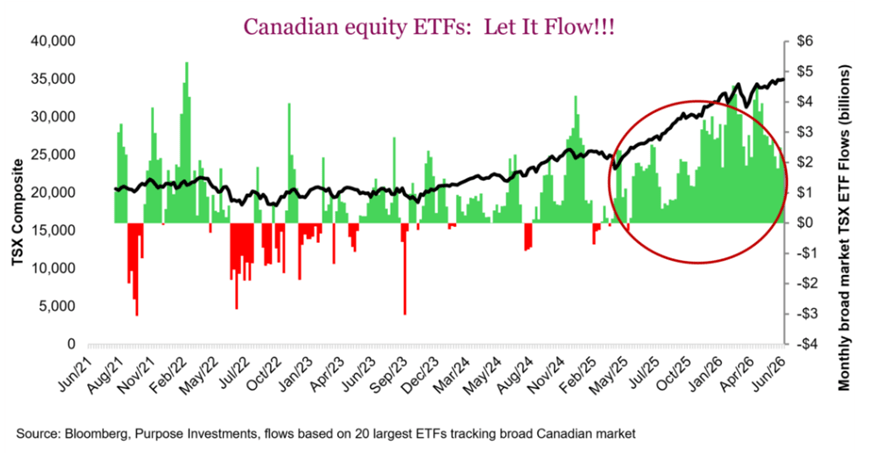
A continued rotation would be generally positive for Canada, international markets (though watch for energy price sensitivity), small- and mid-cap stocks, both in the US and abroad, and lower valuation stocks relative to higher valuation stocks. In the chart below, we can see just how consistent the rotation into Canadian stocks has been since early 2025 and we can also see that inflows into Canadian stocks/ETFs remained consistently positive throughout Q2, despite the outperformance of some technology stocks. Investor conviction in stocks outside of the US technology sector appears to be widespread.
That said, the strong inflows into Canadian stocks creates its own issues, such as Canadian banks and many other stocks in other sectors trading at never-before-seen valuations. High valuations means that long-term future returns could trail that of past returns unless these stocks can find a way to grow faster in the future than they have in the past. Ensuring that one does not have too much exposure to a single stock or sector looks increasingly important at this point in time.
Maintaining some exposure to big tech is important given their large weighting in the global investment universe, but being pickier about what you own is important. Many software stocks now trade at or near all-time low valuations due to the perceived threat of AI, but many will be unaffected by or benefit from the introduction of AI so could end up being great long-term investments. This is an area worth paying closer attention to now and over the next few years.
With plenty of uncertainty surrounding the direction of inflation and interest rates, as well as economic uncertainty due to the continuation of the Iran war, maintaining exposure to shorter term and higher quality fixed income securities appears to be the best way to attain traditional fixed income exposure to mitigate portfolio risk and satisfy income needs.
Mortgage investment corps (MICs) and public credit funds have continued to pay consistent income with little volatility while many funds holding long-lived assets in the private equity and private credit segments struggle under a period of relatively high interest rates (relative to 2021 at least). Fund manager selection is key, and we are starting to see the value of picking experienced fund managers.
Maintaining a well-diversified portfolio tailored to your risk tolerance is the best way to avoid major negative surprises and participate, if not capture the majority of upside provided by asset markets over time. You can be sure that we are tracking all market developments and are making portfolio adjustments to manage risk and pursue returns as investment opportunities arise.
If you ever have any questions or concerns about your portfolio or the investment markets in general, please feel free to reach out to us.
Sincerely,


The information contained in this report was obtained from sources believed to be reliable, however, we cannot present that it is accurate or complete. Information has been sourced from the RJL Bond Desk or RJ Private Client Solutions, unless otherwise noted. Index and sector returns represented in this commentary are measured using the S&P/TSX Total Return Index and S&P/TSX GICS Sector Indices as detailed in Raymond James Ltd.’s Insights & Strategies: Quarterly Edition. This report is provided as a general source of information and should not be considered personal investment advice or solicitation to buy or sell securities. The views expressed are those of the author and not necessarily those of Raymond James Ltd. (Member Canadian Investor Protection Fund).
This Quarterly Market Comment has been prepared by Steele Wealth Management and expresses the opinions of the author and not necessarily those of Raymond James Ltd. (RJL). Statistics and factual data and other information are from sources RJL believes to be reliable but their accuracy cannot be guaranteed. The performance outlined in the report is net of fees. The client account performance may vary from the model portfolio due to several factors, including the timing of contributions and dates invested in model. The performance reported is that of the account that represents the model, not a composite. Performance calculation for the models may be different than the index used as a reference point. It is for information purposes only and is not to be construed as an offer or solicitation for the sale or purchase of securities. This Quarterly Market Comment is intended for distribution only in those jurisdictions where RJL and the author are registered. Securities-related products and services are offered through Raymond James Ltd.
Commissions, trailing commissions, management fees and expenses all may be associated with mutual fund investments. Please read the prospectus before investing. Mutual funds are not guaranteed, their values change frequently and past performance may not be repeated.
Raymond James (USA) Ltd. advisors may only conduct business with residents of the states and/or jurisdictions in which they are properly registered. Raymond James (USA) Ltd. is a member of FINRA/SIPC.